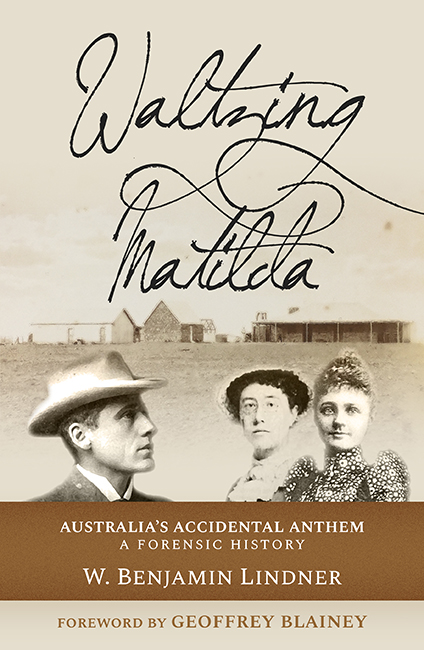
One song, born of an unlikely meeting
In August 1895, the young Sydney lawyer-poet Andrew Barton 'Banjo' Paterson was making a brief visit to outback Queensland. He had been brought to Dagworth Station, near Winton, by his fiancée Sarah Riley — a friend of Christina Macpherson. There Christina, an amateur musician, played him a melody, and to her tune Paterson wrote the words of Waltzing Matilda: an accidental collaboration between two people who had met by chance and soon went their separate ways.
The song's defiant swagman has long been tied to the turbulent backdrop of the 1894 Shearers' Strike — the burning of the Dagworth woolshed and the death of striker Samuel 'Frenchy' Hoffmeister at the Combo Waterhole — yet who the swagman really was remains an unanswered question, and much of what surrounds the song has hardened into folklore.
"This song that started as an accidental collaboration in outback Queensland in 1895 caused the death of a seven-year relationship and went on to inspire a nation during World War II, following Banjo Paterson's death in 1941."
The chance meeting came at a cost: it ended Paterson's seven-year engagement to Sarah Riley. Written by a criminal barrister, Waltzing Matilda — Australia's Accidental Anthem is a forensic history of the events, the people and the places that led to the writing of Australia's internationally famous song. Its evidence-based approach dispels many of the myths and historical inaccuracies that have become folklore — revealing the facts about the swagman, the contributions of Christina Macpherson and Sarah Riley, and the timing and the place of the composition.
Lindner's forensic approach concludes that Banjo's original lyrics were composed as a love serenade…then, within 100 years, a later version was proposed as Australia's unofficial national anthem attracting well over 800 versions.
How does a 4 verse ditty evolve into over 800 incarnations?
Paterson himself thought it was “not a very great literary achievement but it has been sung in a good many parts of the world. Perhaps it was the effect of the (Winton) bore-water.” (ABC Radio Talk, 16/12/1934).
The Great Shearers’ Strike sweeps Queensland. The Dagworth woolshed is burned, and striking shearer Samuel ‘Frenchy’ Hoffmeister is found dead at the Combo Waterhole — was the swagman in the song real?
Paterson, Riley and the Macphersons gather at Dagworth Station. Christina plays a tune; Banjo writes the words in his notebook — now held by the National Gallery of Australia, Canberra.
The engagement ends. Paterson returns to Sydney, alone.
The Marie Cowan arrangement, written for Billy Tea, spreads a different form of the song across Australia and beyond.
Banjo Paterson dies. Through the Second World War, Waltzing Matilda surges into the role of Australia’s unofficial anthem.
More than 850 recordings of the song are held in the National Film and Sound Archive — explored in our Recordings Archive.